Download
Studies

Project details
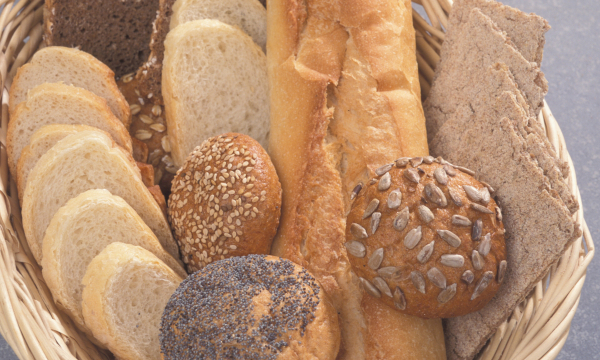
Feasibility study of a bread recycling chain supported by an insertion structure on the territory of Orléans Métropole


Description

  • Project duration: 2016 - 2016
  • Client: Orléans Métropole
  • Country or region: France
  • Department(s):
    Supply chains and territories
    Circular economy

Project aim:
ECOZEPT has been mandated by the conglomeration of Orléans (AgglO) to establish a feasibility study on the development of a supply chain for recycled bread by a local reintegration structure.

Activities of ECOZEPT:
With this objective Ecozept hat realized a literature study and a survey with more than 110 interviews. Furthermore ECOZEPT explored technical-economical scenarios and the conditions for the supply chain in accordance with local public and private actors as well as associations. An analysis of existing recycling supply chains in other regions in France could supplements the approach.

Client:
Orléans Métropole

Similar projects

NoAW - No Agricultural Waste: towards a circular agricultural economy

Driven by a near zero-waste society requirement, the goal of the NoAW project is to generate innovative efficient approaches to convert growing agricultural waste issues into eco-efficient bio-based products opportunities with direct benefits for the environment, the economy and EU consumers. To achieve this goal, the NoAW concept relies on developing holistic life cycle thinking and circular management of agro-wastes.

0more

Analysis of the market structure and market share of organic products within the out-of-home catering sector in Germany

To date, there has been a lack of reliable data on the significance of organic products in out-of-home catering in Germany. The project aims to address this knowledge gap by developing a method to regularly capture the monetary value of organic food in the out-of-home catering (OHC) sector.

0more

Market potentials of innovative crops in Bavaria

Bavarian agriculture is adapting to changing climatic conditions and consumer habits. The list of crops that can grow under these new conditions is expanding (e.g. lentils, chickpeas, peanuts, sweetcorn, grain millet, buckwheat, quinoa, amaranth, sesame, etc.). The Bavarian State Research Centre for Agriculture (LfL) has set itself the goal of promoting the production of these innovative arable crops by exploring their potential for the production of innovative foods through research and knowledge transfer. In order to calibrate and orientate this support work, the LfL needs an assessment of the market potential.

0more